Infinite Poem
Jewish Placemaking in the Deep South
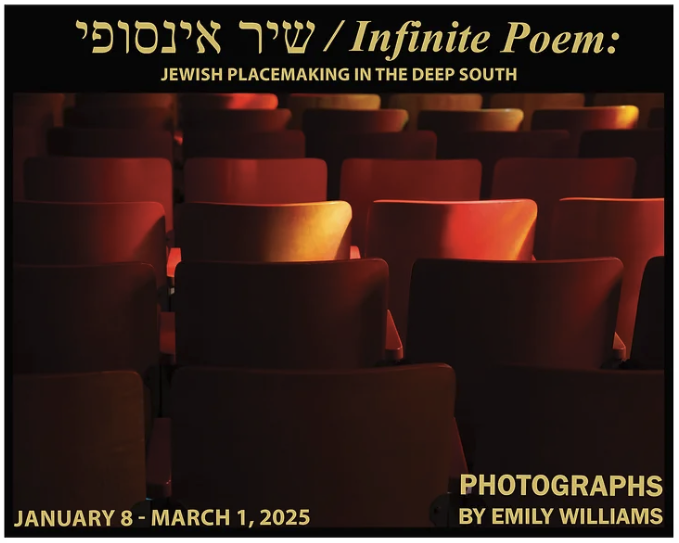
Infinite Poem
Jewish Placemaking in the Deep South
Infinite Poem, titled after the work of Yehuda Amichai, is an exploration of identity and place - both literal and metaphorical - in small Jewish communities in the Deep South. Faced simultaneously with antisemitism and both pressure and opportunity to assimilate into whiteness, this work seeks to understand how Jewish communities have preserved traditions while forging their own unique identity in places that are often perceived as the very edges of the diaspora.
This selection of images and oral history audio recordings document a broad range of Jewish sites and experiences through photography and oral history interviews across Texas, Louisiana, Mississippi, Alabama, and Georgia. Almost all of the sites fall into three main categories - synagogues, storefronts, and cemeteries. The aforementioned places often served more than one purpose.
Plots of land for cemeteries were frequently the first collective purchase of Jewish communities when they found themselves in a new, often foreign, place. Storefronts were not simply places of commerce, but often acted as makeshift synagogues for communities which lacked a designated building. Synagogues continue to hold importance far beyond worship, and serve as places to preserve language, foodways, traditions, and culture. Although שיר אינסופי/Infinite Poem deals with specifically with religious sites, primarily synagogues, the images encompass all three categories.
There is no singular conclusion to be drawn from the body of work, no capital “T” Truth, rather a series of smaller truths elucidated through images and audio. This exhibition celebrates the persistence of these communities, mourns their loss, and preserves what was and what still is. It seeks to fill a silence in the archive by uplifting the voices, spaces, and places of Southern Jews and Jewish Southerners.